


A transformação verde e inteligente da indústria de turbinas a vapor da China inaugura um novo futuro para a fabricação de equipamentos.
2026-03-27 00:00Jointly issued by the Ministry of Industry and Information Technology, the State Administration for Market Regulation, and the National Energy Administration, the "Work Plan for Stabilizing Growth in the Power Equipment Industry (2025-2026)" clearly identifies steam turbines as a core category of power equipment for key support. It proposes to enhance the supply capacity of high-efficiency and clean steam turbines, make breakthroughs in key core technologies such as high-temperature materials and intelligent control, and coordinate the upgrading of traditional thermal power with the development of clean energy equipment, charting a clear path for the industry's development. The concurrently issued "Implementation Opinions on Promoting the High-Quality Development of 'Artificial Intelligence + Energy'" lists "AI + Thermal Power" as a key area, promoting the deep integration of technologies like big data and the Internet of Things with steam turbines to accelerate the pace of intelligent transformation in the industry.
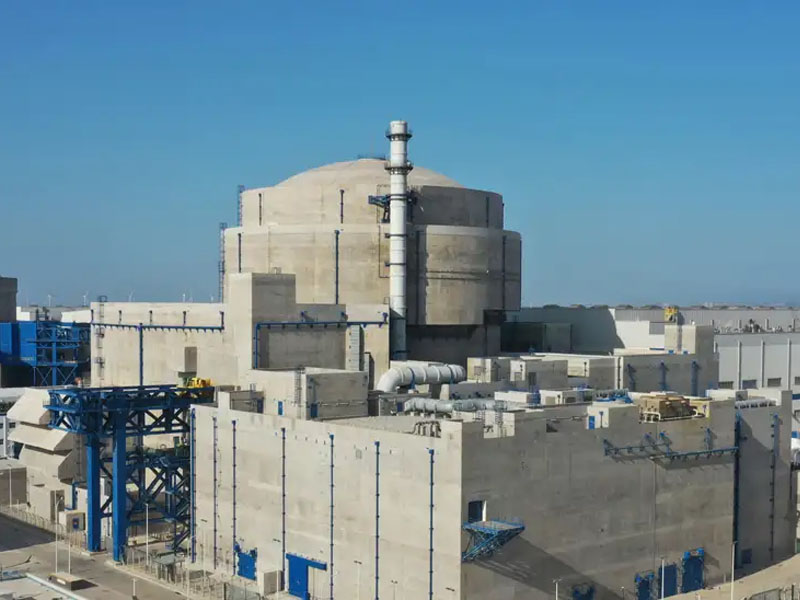
Amid sustained policy dividends and the demand for energy structure adjustment, China's steam turbine industry is showing steady growth. Data indicates that the current market size of China's steam turbine industry exceeds 50 billion yuan, having reached 36.403 billion yuan in 2025, with a compound annual growth rate maintained between 5% and 7%. Notably, the nuclear power steam turbine sector has seen particularly outstanding growth. China has become the world's largest single market for nuclear power steam turbines, with its market share rising to 35% of the global total in 2025. The batch deployment of third-generation nuclear power units like Hualong One and Guohe One has driven the continuous increase in the localization rate of nuclear power steam turbine technology. Concurrently, there is strong demand for the upgrading and retrofitting of traditional thermal power. Deep peak-shaving retrofit projects are being intensively implemented in regions like East China and North China, with the related retrofit market size exceeding 50 billion yuan in 2025, injecting sustained incremental demand into the industry.
Green and intelligent transformation has become the core theme of industry development, with leading companies taking the lead in exploration and practice, forming replicable development models. In green manufacturing, Harbin Electric Turbine Co., Ltd. successfully became the industry's first five-star zero-carbon factory. By scaling up the application of green power, innovating low-carbon welding technology, and establishing an energy and carbon management center, it has built a "whole-process + whole-chain" carbon reduction system, achieving coordinated carbon reduction at the energy source, process, and management levels. Dongfang Turbine Co., Ltd. has built the country's first green and efficient welding digital workshop. Utilizing intelligent technologies like narrow-gap automatic welding and 5G data acquisition, it has realized a "zero-defect, zero-deformation, zero-emission" "triple-zero" model, increasing product qualification rates to nearly 100% and tripling per capita productivity. Through intelligent workshop transformation, Shanghai Turbine Plant has achieved paperless production, increased capacity by 25%, and reduced processing time for some procedures by 40% to 50%, significantly enhancing green, low-carbon production efficiency.
Breakthroughs have also been made in intelligent upgrading, with the industry's "intelligent transformation and digital transition" accelerating comprehensively. The "lights-out production line" in the blade manufacturing branch of Dongfang Turbine achieves 24-hour uninterrupted, unmanned machining with a precision of 0.03mm, tripling blade output and increasing per capita efficiency by 650%. Harbin Electric Turbine has established a digital machining and assembly workshop. Relying on AI tools for remote operation, maintenance, and intelligent monitoring, it enables real-time visualization of equipment operation data, production progress, and quality information, greatly improving management efficiency. Shanghai Electric integrates mechanistic models with AI algorithms to build equipment condition monitoring and performance optimization systems, providing customers with precise operation and maintenance services and reducing lifecycle costs. Meanwhile, industry standards like DL/T 2925-2025 "Technical Requirements for Grid Connection of Steam Turbine Governing Systems" have been formally implemented. These standards unify the grid-connection characteristic requirements for governing systems of thermal power steam turbines with 300MW capacity and above, providing technical guidance for the coordinated operation of governing systems with the power grid and strengthening the foundation for standardized industry development.
A tendência de desenvolvimento coordenado da cadeia industrial é significativa, com o processo de localização de equipamentos de alta tecnologia acelerando. Avanços significativos foram alcançados em áreas-chave, como pás de ligas de alta temperatura, sistemas de controle eletro-hidráulicos e sistemas de controle de gêmeos digitais, rompendo monopólios estrangeiros. Impulsionada por políticas específicas no setor de equipamentos de energia marítima, a taxa de localização de turbinas a vapor marítimas continua a crescer, atingindo a meta de 78,3% para 2025. O aumento dos subsídios para sistemas de turbinas a vapor de alta eficiência em navios mercantes de longo curso com mais de 100.000 toneladas está impulsionando a otimização da estrutura da cadeia industrial. Progressos também foram feitos na pesquisa e desenvolvimento de turbinas a vapor especializadas para áreas de ponta, como energia nuclear e energia eólica offshore, com o desempenho dos produtos atingindo níveis internacionalmente avançados, apoiando a estratégia de globalização.
Olhando para o futuro, à medida que as metas de redução de emissões de carbono e neutralidade de carbono se aprofundam e a construção do novo sistema de energia se acelera, a indústria de turbinas a vapor encontrará um espaço de desenvolvimento mais amplo. O setor continuará a se concentrar nas principais diretrizes de alta eficiência, inteligência e desenvolvimento sustentável. O objetivo é desenvolver tecnologias-chave, como turbinas a vapor ultrassupercríticas e turbinas a vapor para sistemas avançados de armazenamento de energia, promovendo o desenvolvimento paralelo de atualizações de equipamentos tradicionais e pesquisa e desenvolvimento de novos equipamentos. Além disso, aproveitando a Iniciativa Cinturão e Rota, as empresas chinesas de turbinas a vapor expandirão ainda mais para os mercados emergentes do Sudeste Asiático, Oriente Médio e África, promovendo a exportação de toda a cadeia de tecnologia, produtos e serviços, alcançando um crescimento anual constante das exportações.
Um representante da Associação Chinesa da Indústria de Turbinas a Vapor afirmou que o setor utilizará políticas como guia, a inovação como força motriz e o desenvolvimento sustentável como alicerce. Aprofundará a cooperação em toda a cadeia produtiva, fortalecerá os avanços tecnológicos essenciais, acelerará o ritmo da transformação verde e inteligente e se empenhará para construir um polo industrial globalmente competitivo, contribuindo significativamente para a segurança energética nacional e para a construção de uma nação industrial forte.